
Seasonal guide · 6 min read
Salt air and the marine layer: a seasonal maintenance guide for coastal Santa Cruz
On the Westside, in Seabright and out at Pleasure Point, salt air and the Monterey Bay marine layer age a built-in differently. A season-by-season care guide for Santa Cruz kitchens.
A built-in Sub-Zero a block from West Cliff Drive lives in a different climate than one in a dry inland valley, and the difference is two things you can taste in the air here: salt and damp. The Monterey Bay marine layer rolls over the Westside, Seabright and Pleasure Point most mornings, and the steady onshore breeze carries a fine film of sea salt that settles on everything it touches.
Neither is dramatic on any single day. But across the seasons they decide how a built-in ages in Santa Cruz, and they shape almost every maintenance call we make from Live Oak to Bonny Doon. Here is what to watch, season by season.
Summer fog: the heaviest load on the condenser
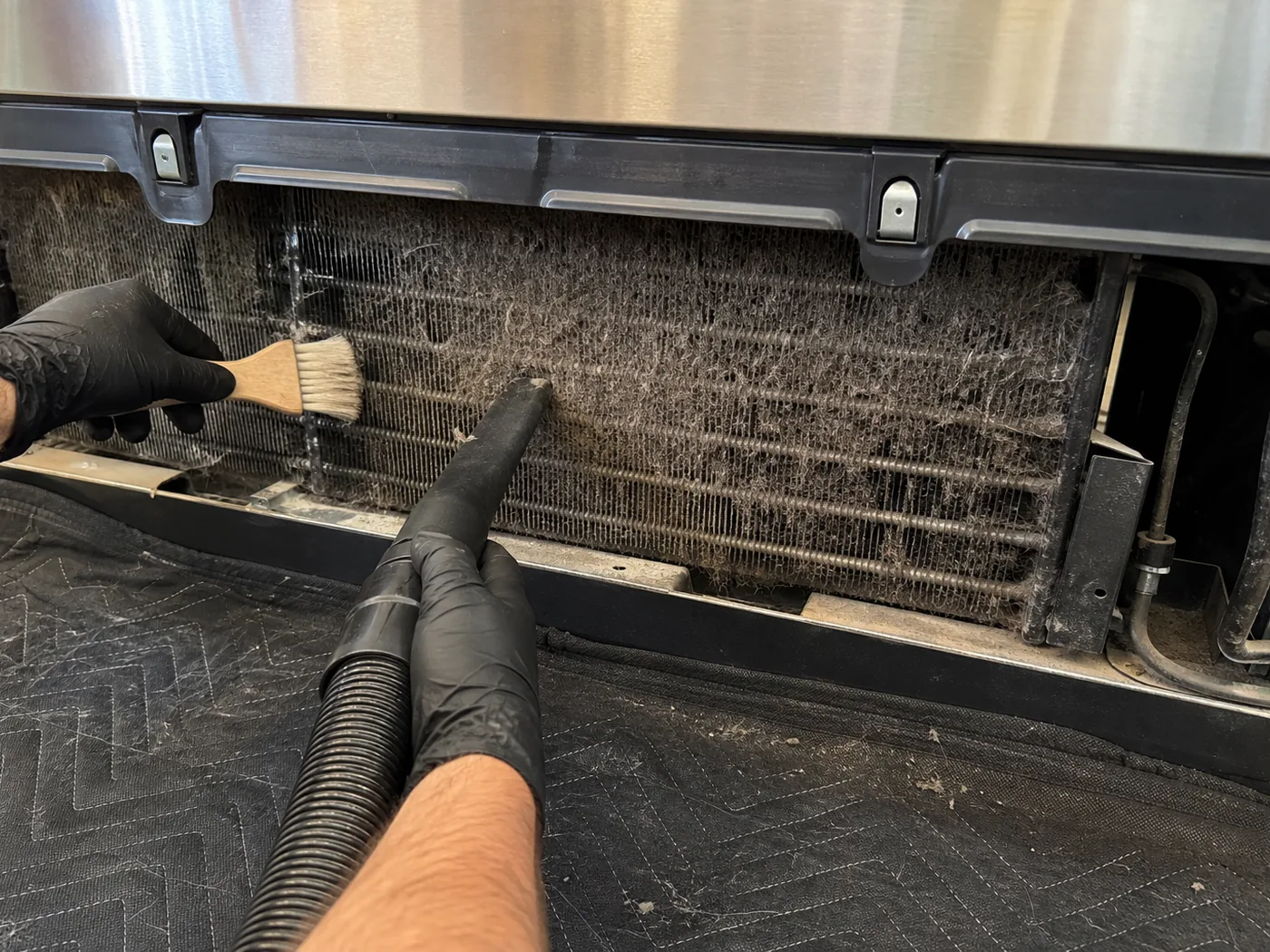
Counter-intuitively, the foggiest stretch of a Santa Cruz summer is the hardest on a refrigerator. A built-in pulls room air across its condenser to shed heat, and on the coast that air arrives damp and faintly salty. The moisture lets fine dust and salt cake onto the coil far faster than it would inland, and a loaded coil makes the compressor run longer and warmer.
This is the season to clean the condenser. On the foggy Westside and out toward Pleasure Point we often find a coil that looks twice its age for the calendar year, simply because of where it breathes. A summer cleaning is the single highest-value thing a coastal owner can do.
Why salt is the quiet problem
Salt doesn't clog a coil the way dust does — it corrodes. Over a few seasons the airborne salt near the bay attacks exposed metal: condenser fins, fasteners, and the contacts inside a unit that vents toward an open kitchen window. We see it most in the older Seabright cottages and the Victorians around Walnut and Mission, where ventilation is generous and the sea air moves straight through.
There is no cure for salt air, only management. Keeping the coil and the area around the unit clean, and catching corrosion on a fastener or contact before it spreads, is what keeps a coastal Santa Cruz built-in on the long side of its lifespan.
Door gaskets through the wet winter
Santa Cruz winters are wet, and the damp settles at the door line. A gasket that sealed perfectly in a dry October starts to sweat and stiffen through the rainy months, and a tired gasket is one of the most common reasons a local fridge runs harder than it should. Late autumn is the time to check the seal — a flashlight test in a dark kitchen will show you light leaking past a gasket that needs attention.
A simple coastal calendar
Clean the condenser in summer, check the door gaskets going into the wet season, and have the airflow and electrical contacts looked at once a year — homes nearest the water and up the fog-fed canyons toward Bonny Doon benefit from it most. That short routine heads off the corrosion and coil-loading that the bay quietly invites, and it costs a fraction of the sealed-system repair a neglected coastal unit eventually needs.
FAQ
Questions & answers
Does living near the beach really shorten a Sub-Zero's life?
It can if the unit is neglected. Salt air and coastal damp accelerate coil loading and corrosion, but a yearly condenser clean and gasket check offsets most of it. Homes on the Westside, in Seabright and at Pleasure Point benefit most.
How often should a coastal Santa Cruz built-in be serviced?
Once a year is the baseline — a condenser clean, a gasket and airflow check, and a look at the electrical contacts for early salt corrosion. The closer you are to the water, the more it pays off.
Guides
More Santa Cruz guides
Sub-Zero Dual Refrigeration Explained: One Warm, One Cold in Santa Cruz
Why every Sub-Zero built-in runs two sealed systems, how to tell a single-circuit failure from a shared cause, and what repair costs in Santa Cruz.
Read the guide → Condensation vs Leak · 5 minSub-Zero Sweating or Leaking in Santa Cruz? Coastal Condensation vs a Real Leak
Sub-Zero sweating in Santa Cruz? Marine-layer condensation gets mistaken for a leak. Learn to tell coastal sweat from a real drain or water-line leak.
Read the guide → Wine cooler repair · 6 minSub-Zero Wine Cooler Repair in Santa Cruz: why a dual-zone column drifts warm
A Sub-Zero wine column has to hold two temperatures at once against the Monterey Bay air. The faults behind warm drift in Santa Cruz — sensors, fans, condensers and the sealed system — and when repair beats replacement.
Read the guide →